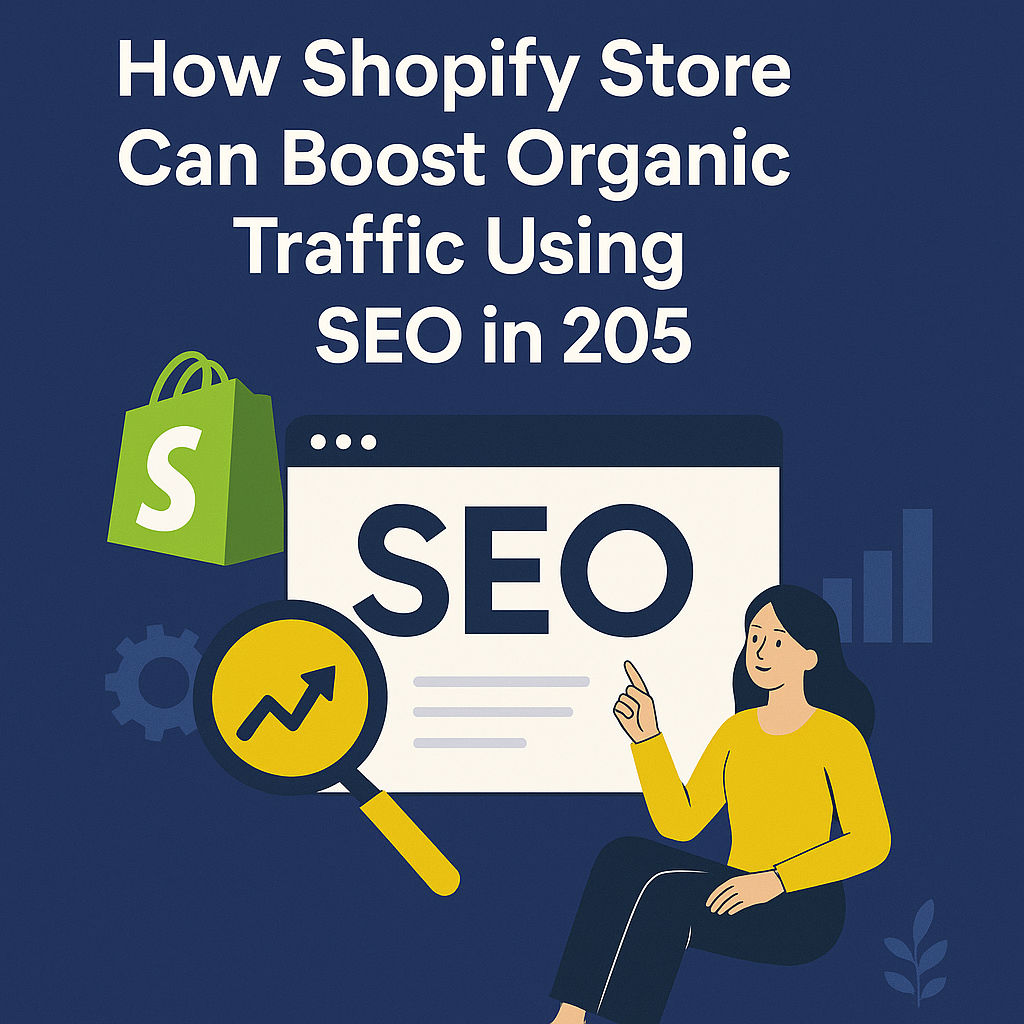
How Shopify Store Owners Can Boost Organic Traffic Using SEO in 2025
Summary
This article explained how Shopify store owners can boost organic traffic in 2025 using product optimization, keyword research, technical SEO, blogging, and authority-building. By improving site structure, publishing helpful content, and tracking results, Shopify businesses can gain consistent visibility, reduce ad dependence, and increase conversions effectively.
Key Takeaways
-
Optimized product pages with clear titles, meta descriptions, and schema boost visibility and improve click-through rates.
-
Targeting buyer-intent and long-tail keywords ensures attracting both researchers and ready-to-purchase customers.
-
Clean site structure, fast page speed, and mobile-first design help Shopify stores rank higher and retain visitors.
-
Blogging and content marketing drive authority, answer customer questions, and bring steady organic traffic.
-
Backlinks, reviews, and influencer collaborations increase trust while strengthening domain authority.
-
Regular tracking with GA4 and Search Console ensures SEO efforts directly connect with sales growth.
-
Avoiding common mistakes like keyword stuffing or ignoring technical SEO prevents ranking losses.
-
SEO is a long-term investment that reduces ad dependence and builds sustainable traffic for Shopify stores.
Understanding Shopify SEO in 2025
What makes Shopify SEO unique compared to other platforms
Shopify simplifies store management, but SEO requires special attention. Unlike WordPress, Shopify’s structure often creates duplicate URLs and technical limitations. To succeed, store owners must understand Shopify’s default SEO setup. Addressing duplicate content and optimizing collections makes the platform more search-friendly.
Key 2025 updates affecting eCommerce SEO
Search engines now prioritize user experience, mobile responsiveness, and content relevance. Google’s AI-driven search results, like SGE, influence how customers discover products.
Voice search also continues growing. Shopify store owners need keyword strategies aligned with natural speech patterns and conversational long-tail queries.
Why Shopify store owners can’t rely only on paid ads anymore
Paid advertising costs continue to rise sharply. Depending only on ads makes businesses vulnerable when budgets decrease or click prices increase. Organic SEO creates sustainable traffic streams. A balanced strategy reduces dependency on ads and builds long-term brand visibility for Shopify stores.
Product Page Optimization Tips for Shopify Stores
Writing product titles that rank & sell
Product titles must balance keywords and readability. Use specific product names, features, and benefits to attract both shoppers and Google. Avoid stuffing titles with unnecessary terms. A natural flow increases clicks, builds trust, and improves rankings across competitive product searches.
Meta descriptions that improve CTR in 2025
Meta descriptions influence click-through rates. Clear, benefit-driven descriptions with call-to-actions encourage shoppers to visit your Shopify store. Include primary keywords naturally. Well-written meta descriptions signal relevance, increasing visibility in AI-enhanced and traditional Google search results.
Using high-quality images & alt text for SEO and accessibility
Optimized product images improve user experience and rankings. Use compressed formats for fast loading without compromising quality and visual appeal. Alt text describes images for both search engines and visually impaired users. Include descriptive phrases with relevant keywords for maximum impact.
Structured data (schema) for products, reviews, and availability
Schema markup helps Google understand product details. Adding structured data highlights reviews, prices, and availability directly within search results. Shoppers trust rich snippets because they display key product information instantly. Implementing schema improves visibility and attracts higher quality traffic.
How to optimize Shopify product pages for mobile shoppers
Most buyers now shop through mobile devices. Shopify pages must load quickly, adapt to screens, and provide simple checkout experiences. Mobile-first design directly impacts rankings. Google rewards stores that prioritize mobile usability and smooth product browsing without technical barriers.
Keyword Research for Shopify in 2025
Finding buyer intent keywords
Keywords signal buying intent. Transactional keywords like “buy running shoes online” attract ready-to-purchase visitors compared to broad informational terms. Shopify owners must balance transactional and informational keywords. This strategy ensures capturing interest from researchers and converting buyers simultaneously.
Using AI-driven keyword tools for more accurate insights
AI-powered keyword tools uncover hidden opportunities. These platforms analyze intent, trends, and competitor data more effectively than traditional keyword tools. Leverage AI suggestions to identify emerging queries. Adjust content early and build authority before competitors dominate trending keywords.
Long-tail keywords and voice search optimization
Voice search continues expanding. Long-tail keywords like “best leather wallet under fifty dollars” match how users phrase spoken queries. Shopify store owners should include conversational questions in product descriptions, FAQs, and blogs. These strategies align naturally with voice search.
Competitor keyword analysis for Shopify stores
Analyzing competitor stores reveals profitable keywords. Identify which search terms drive traffic to similar Shopify businesses in your niche. Competitor research uncovers missed opportunities. By targeting overlooked keywords, your Shopify store can gain rankings where competition remains weaker.
Seasonal keyword planning for eCommerce success
Shoppers search differently across seasons. Keywords like “holiday gift ideas” or “summer workout clothes” dominate during specific times of year. Plan seasonal content ahead. Updating product titles, meta descriptions, and blogs ensures your Shopify store aligns with customer intent.
Site Structure & Technical SEO for Shopify
A logical site structure improves user experience and SEO. Simple menus and clear categories make browsing products easier for customers. Google also rewards organized websites. Well-structured navigation ensures crawlers index your pages correctly, improving rankings across relevant product categories.
Optimizing Shopify collections and categories
Collections should target specific keywords. For example, “Men’s Running Shoes” ranks better than a generic “Shoes” collection page. Use keyword-rich descriptions on collection pages. These improve relevance while guiding shoppers to the right products quickly.
Fixing duplicate content issues
Shopify often generates duplicate URLs. Duplicate content confuses search engines, making it difficult for stores to rank properly. Canonical tags help fix duplicate problems. Implementing them ensures search engines recognize your primary product page over duplicate versions.
Page speed, Core Web Vitals, and mobile-first design
Slow-loading pages reduce sales. Google’s Core Web Vitals measure speed, interactivity, and visual stability, directly impacting rankings. Optimize images, reduce scripts, and use Shopify apps carefully. Mobile-first performance ensures users browse comfortably without waiting for pages.
XML sitemaps & robots.txt – getting your store indexed properly
Shopify generates automatic XML sitemaps. Submitting them to Google Search Console ensures your store pages get crawled and indexed quickly. Robots.txt must be configured correctly. Blocking unnecessary pages saves crawl budget and helps Google focus on important product content.
Content Marketing & Blogging for Shopify SEO
Why blogs are still powerful for Shopify SEO in 2025
Blogs provide opportunities to target informational keywords. Shopify stores can attract researchers and later convert them into paying customers. Publishing consistent blogs also builds authority. Search engines reward websites that update frequently with helpful, customer-focused content.
Content ideas Shopify owners can use
Blog about product comparisons, care tips, buying guides, or trend predictions. These posts answer customer questions while boosting search rankings. Case studies or customer success stories create trust. Combining storytelling with keywords makes content engaging and valuable.
Using blog posts to target long-tail search queries
Long-tail keywords like “best organic skincare for sensitive skin” attract specific audiences. Blogs are perfect platforms for capturing these searches. Creating niche-focused content drives qualified traffic. Visitors are more likely to buy when content solves their exact needs.
Internal linking from blogs to product/collection pages
Every blog should link to relevant product or collection pages. Internal links transfer authority and guide readers toward purchase decisions. This strategy also reduces bounce rates. Readers stay engaged while exploring multiple parts of your Shopify store.
Leveraging AI-generated drafts but keeping human editing
AI helps generate content ideas quickly. However, human editing ensures authenticity, brand voice, and accurate information remain intact. Google values experience and expertise. Blending AI efficiency with human insight delivers the best content quality for 2025 SEO.
Building Authority with Backlinks & Social Proof
Guest blogging & partnerships for eCommerce backlinks
Backlinks remain critical for ranking. Writing guest blogs on industry websites builds authority and drives referral traffic to Shopify stores. Partnerships with complementary brands expand reach. Collaborations create high-quality backlinks and increase visibility across multiple platforms.
Using influencers and user-generated content to improve SEO
Influencers create content that generates backlinks naturally. Their followers also discover your products, boosting organic traffic and engagement. User-generated reviews, photos, and videos provide authentic content. Google favors businesses with real customer interactions and strong community presence.
How reviews & testimonials impact rankings in 2025
Reviews influence buying decisions and SEO rankings. Google prioritizes stores with high-quality, recent, and consistent customer feedback. Encourage reviews by following up with buyers. Displaying testimonials builds trust and helps search engines recognize product relevance.
Avoiding Spammy link-building that triggers Google penalties
Cheap link-building services harm SEO. Google penalties reduce visibility, and recovery often takes months of effort and investment. Focus on quality over quantity. A few strong, niche-relevant backlinks outperform dozens of irrelevant, low-authority links.
Tracking & Measuring SEO Success on Shopify
Setting up Google Search Console & GA4
Google Search Console tracks search performance, while GA4 measures on-site behavior. Both tools provide essential insights for Shopify SEO. Integrating them ensures accurate tracking. Store owners can see which keywords, pages, and strategies produce the most conversions.
Key SEO metrics to track
Track rankings, organic traffic, click-through rates, and conversion rates. Together, these metrics show whether your strategy delivers results. Focusing only on rankings is misleading. True success comes from organic traffic generating consistent revenue and repeat customers.
Using Shopify analytics to connect SEO efforts with sales
Shopify’s built-in analytics reveal how customers move from search to purchase. Connecting SEO traffic with sales data proves ROI. This helps refine campaigns. Store owners can double down on strategies producing sales while reducing ineffective SEO efforts.
How often to audit and update your SEO strategy
SEO evolves constantly. Regular audits ensure your store adapts to new Google algorithms, user behavior, and industry changes. Audit quarterly for best results. Updating product descriptions, technical settings, and content keeps your Shopify store competitive.
Common Shopify SEO Mistakes to Avoid in 2025
Ignoring technical SEO issues
Broken links, duplicate content, and indexing problems harm rankings. Many Shopify owners overlook these technical issues until traffic drops. Performing regular SEO audits ensures issues are fixed early. This keeps your store optimized and search-engine friendly.
Stuffing keywords instead of writing naturally
Keyword stuffing reduces readability. Google’s algorithms penalize unnatural content, lowering both rankings and customer trust. Focus on natural keyword placement. Write for people first, search engines second, balancing SEO with clear messaging.
Not updating product descriptions regularly
Static descriptions become outdated. Shoppers and Google both prefer fresh, accurate content reflecting current product details and trends. Updating descriptions also introduces new keywords. This improves relevance and keeps your store competitive against fast-changing search terms.
Relying only on ads and ignoring organic SEO
Ads drive temporary results. Once budgets end, traffic disappears, leaving stores vulnerable to fluctuating advertising costs. Organic SEO ensures stability. Combining ads and SEO produces the strongest, most sustainable eCommerce growth in 2025.
Final Takeaways – SEO for Shopify Store Owners in 2025
Shopify store owners must adapt quickly. SEO in 2025 means optimizing product pages, targeting buyer intent keywords, and focusing on mobile-first experiences. Sustainable organic traffic reduces reliance on ads. By combining technical SEO, content, and authority building, your Shopify store thrives long-term.
FAQs
Q1: How to implement Shopify SEO in 2025?
Start with product page optimization, keyword research, and technical fixes. Then expand with content marketing, backlinks, and regular audits.
Q2: Which SEO strategies work best for Shopify stores?
Optimized product pages, long-tail keyword targeting, seasonal content, and authority-building through backlinks and reviews drive consistent organic growth.
Q3: Why is SEO important for Shopify?
SEO ensures steady, cost-effective traffic. Unlike ads, it builds long-term visibility, trust, and higher conversions for Shopify store owners.
Q4: Does SEO really help increase Shopify sales?
Yes. SEO attracts ready-to-buy visitors, builds trust, and reduces reliance on expensive paid advertising campaigns. It directly boosts sales.