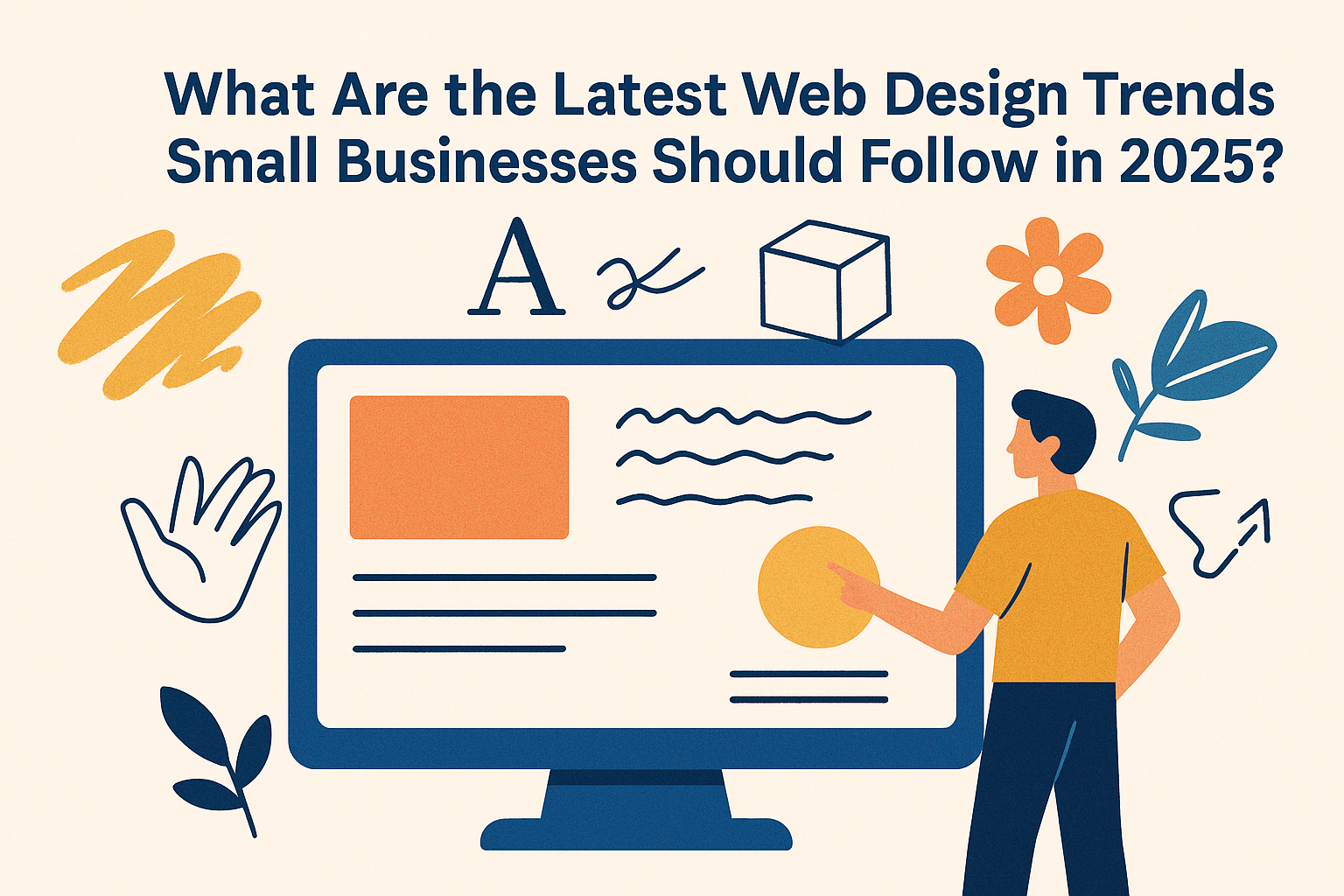
What Are the Latest Web Design Trends Small Businesses Should Follow in 2025?
Summary
In 2025, small businesses must stay ahead in web design to create engaging, user-friendly, and high-converting websites. Staying updated with Web Design Trends 2025 is crucial for improved user experience, higher rankings, and stronger online presence.
Key Features at a Glance:
- Minimalist & clean website layouts
- AI-driven personalization for content & recommendations
- Mobile-first responsive design
- Accessibility & inclusive design compliance
- Interactive visuals & micro-animations
- Voice search optimization
- Technical SEO & structured data
- Local SEO targeting cities/states
- Fast-loading websites (Core Web Vitals compliant)
- Conversion-focused design elements
Latest Web Design Trends Small Businesses Should Follow in 2025
Minimalist & Clean Design
Minimalist design continues to dominate Web Design Trends 2025. Simplified layouts, ample whitespace, and uncluttered navigation improve user focus and website performance.
Why it matters:
- Faster load times (35% faster on average according to Adobe 2024 survey)
- Increased engagement and reduced bounce rates
- Clearer visual hierarchy, highlighting CTAs
How to implement:
- Limit color palette to 2–3 main colors
- Use bold typography for headings and key messages
- Reduce unnecessary content blocks or pop-ups
Technical Insight:
- Use CSS Grid for clean layout structure
- Optimize images with WebP format
- Apply lazy loading for faster page render
-Driven Personalization
AI integration is reshaping how small businesses engage visitors. Personalization can boost conversion rates by 15–20%, offering users exactly what they need.
Trends to follow:
- Personalized homepage banners based on visitor location or behavior
- AI-powered product recommendations for e-commerce
- Dynamic call-to-actions based on user interactions
- AI chatbots for instant, personalized support
Technical Insight:
- Use machine learning algorithms to track visitor behavior
- Integrate APIs like Recombee or ChatGPT for content personalization
- Leverage CRM data to customize user experience
Mobile-First & Responsive Design
With over 60% of traffic coming from mobile devices, a mobile-first approach is no longer optional. Google also prioritizes mobile-friendly websites in rankings.
Implementation tips:
- Design using responsive grids for multiple devices
- Use touch-friendly buttons and navigation
- Test load times across devices and optimize images
Statistic: Mobile-optimized websites see 30% lower bounce rates and 25% higher engagement.
Accessibility & Inclusive Design
Accessibility is both an ethical obligation and an SEO advantage. Websites compliant with WCAG standards cater to all users, including those with disabilities.
Key practices:
- Alt text for images and descriptive links
- Keyboard navigable menus and forms
- High contrast text for readability
- Clear font sizes and typefaces
EEAT Benefit: Enhances trust and authority, showing businesses care about all users.
Interactive Visuals & Micro-Animations
Interactive elements make websites more engaging. Micro-animations guide user attention, highlight features, and improve the user journey.
Examples:
- Scroll-triggered animations for storytelling
- Hover effects on buttons and product cards
- Interactive charts and infographics
- Animated icons for CTA highlights
Statistic: Sites with micro-interactions have 15–25% higher user engagement.
Technical Insight:
- Use CSS3 & SVG animations to reduce performance impact
- Avoid overloading pages, keeping animations subtle
Voice Search & AI Integration
Voice search adoption continues to grow rapidly, with 27% YoY increase in searches on smart devices. Optimizing content for voice queries improves discoverability.
Tips for optimization:
- Use conversational, natural language keywords
- Include FAQs for direct answers
- Ensure fast page speed and mobile optimization
- Implement structured data for better snippet extraction
Technical Insight:
- Use JSON-LD FAQ schema
- Focus on short, concise sentences for voice-read answers
Core Web Vitals & Fast-Loading Sites
Google’s Core Web Vitals are critical in 2025. They measure speed, interactivity, and visual stability.
Metrics to track:
- Largest Contentful Paint (LCP) < 2.5s
- First Input Delay (FID) < 100ms
- Cumulative Layout Shift (CLS) < 0.1
Optimization strategies:
- Compress images and use CDN services
- Minimize JavaScript render-blocking
- Enable browser caching
Statistic: Sites with optimized Core Web Vitals experience 20% higher dwell time.
SEO Optimization
For small businesses, local SEO ensures visibility in city/state searches.
Steps to optimize:
- Target city-specific keywords, e.g., “Web Design Trends 2025 for Miami small businesses”
- Optimize Google Business Profile with images, hours, and services
- Maintain NAP (Name, Address, Phone) consistency across all pages
- Include internal links to city-specific landing pages
Statistic: 78% of local mobile searches result in offline purchases (BrightLocal, 2024)
Dark Mode & Theme Switching
Dark mode is a growing user preference trend. It reduces eye strain and improves engagement for night-time browsing.
Implementation:
- Provide toggle option between light and dark themes
- Ensure accessibility and contrast compliance for dark mode
- Update graphics and images for proper visibility
Statistic: 80% of users prefer websites with dark mode options (UX Collective, 2024)
Security & Privacy Compliance
Website security is a trust signal and ranking factor.
Steps:
- Install SSL certificate and enforce HTTPS
- Display GDPR/CCPA privacy policies clearly
- Conduct regular security audits
- Use secure authentication for user accounts
Statistic: 43% of users abandon websites due to perceived security risks (HubSpot, 2024)
FAQs (Frequently Ask Questions)
What are the top web design trends small businesses should follow in 2025?
The top trends include minimalist and clean layouts, AI-driven personalization, mobile-first responsive design, accessibility compliance, interactive visuals, voice search optimization, Core Web Vitals optimization, local SEO targeting, dark mode support, and robust website security.
How can AI-driven personalization improve website performance?
AI personalization tailors content, product recommendations, and call-to-actions to individual users, increasing engagement, conversion rates, and customer satisfaction.
Why is mobile-first design crucial for small business websites?
With over 60% of web traffic from mobile devices, mobile-first design ensures fast loading, smooth navigation, and higher rankings on Google, improving both user experience and SEO performance.
What accessibility features should a small business website implement?
Implement alt text for images, keyboard navigation, high contrast text, readable fonts, and ARIA roles. These features make websites usable for all audiences and demonstrate authority and trustworthiness.
How do interactive visuals enhance user experience?
Interactive visuals like micro-animations, hover effects, scroll-triggered graphics, and infographics guide user attention, improve engagement, and make complex information easy to understand.
How can websites be optimized for voice search in 2025?
Use conversational keywords, structured data, FAQ sections, and fast-loading pages. Optimizing for voice search improves discoverability on smart devices and captures growing voice traffic.
What are Core Web Vitals and why do they matter?
Core Web Vitals are Google’s performance metrics measuring speed (LCP), interactivity (FID), and visual stability (CLS). Optimizing these improves ranking, user experience, and engagement.
How can local SEO improve visibility for small businesses?
Local SEO ensures your business appears in city-specific searches. Use Google Business Profile, local keywords, structured data, and NAP consistency to attract nearby customers and increase conversions.
Why should websites offer dark mode options?
Dark mode reduces eye strain, improves readability at night, and aligns with modern user preferences, which can increase engagement and retention.
What are the essential website security measures in 2025?
Install SSL certificates, HTTPS, privacy policies (GDPR/CCPA), secure authentication, and conduct regular security audits. Security boosts user trust and prevents data breaches.