AEO vs SEO in 2025: Complete Guide to Modern Search Optimization
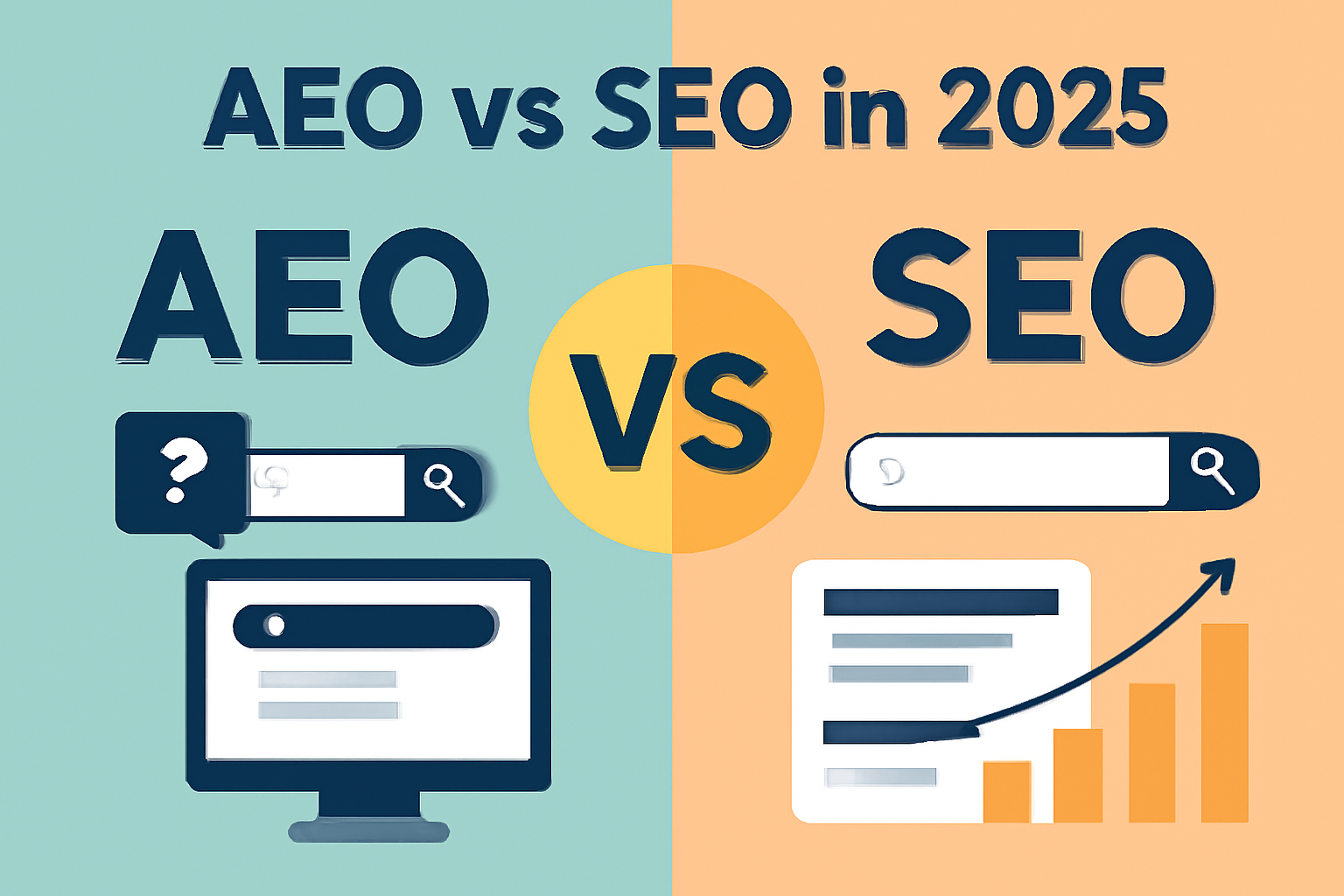
The world of search optimization has changed completely by 2025. Traditional SEO (Search Engine Optimization) has powered digital marketing for years, helping websites rank on Google and bring in organic traffic. But a new strategy, AEO (Answer Engine Optimization), has emerged with the rise of artificial intelligence and answer-focused search.
Today, users no longer want to scroll through multiple websites to find answers. They expect instant, conversational responses from AI-powered tools like ChatGPT, Google Search Generative Experience, Bing Chat, and voice assistants. This shift has made AEO just as important as SEO, and businesses that understand both will dominate the new era of online visibility.
Introduction to SEO in 2025
SEO remains a cornerstone of digital marketing even in 2025. Its primary purpose is to help websites appear in search engine result pages (SERPs) whenever users type relevant queries. Websites that achieve high rankings on Google gain more traffic, more leads, and more conversions.
The process involves optimizing content, technical factors, and overall website structure to match the algorithms of search engines. Even though AI has changed the landscape, SEO is still valuable because human users continue to rely on search for research, shopping, and decision-making.
Introduction to AEO in 2025
AEO, or Answer Engine Optimization, is the new frontier of online visibility. It is designed for AI-powered answer engines instead of traditional search pages. These engines aim to give users direct answers rather than a long list of links.
By 2025, users expect instant solutions. AEO ensures that your brand is present in the answers generated by AI tools, giving you visibility and authority even if users never click on your website.
How Traditional SEO Works
Traditional SEO works through three major processes: crawling, indexing, and ranking. Search engine bots discover your website content, store it in their database, and rank it based on relevance and authority.
The better your website aligns with ranking factors like keywords, backlinks, mobile performance, and site speed, the higher you appear in search results. This brings long-term traffic and potential customers to your site.
How AEO Works
AEO works differently because AI-driven platforms do not provide lists of links. Instead, they analyze the web, understand user intent, and generate a conversational answer.
When your content is clear, structured, and trustworthy, the AI engine is more likely to use it as part of its response. This creates brand recognition and authority without needing a user to visit your website directly.
Core Purpose of SEO
The core purpose of SEO is to generate organic traffic. When a user searches for a product, service, or information, your website appears in the results. The click brings them to your site, where they may convert into a lead or customer.
SEO is still critical because organic traffic is often highly valuable. Visitors from search engines are actively looking for solutions, making them easier to convert than random social media traffic
Core Purpose of AEO
The purpose of AEO is to build presence and authority in the AI-powered digital space. Even if users do not click on your website, your brand gains trust by appearing in instant answers.
In 2025, brand influence often comes from visibility in AI-generated content. Users repeatedly exposed to your brand in these answers are more likely to recognize and trust it over time.
User Journey in SEO
SEO serves users who are willing to explore multiple options. They search for a term, browse through links, and select the site that best meets their needs.
This journey leads to website visits, deeper engagement, and conversions. SEO is perfect for traffic-driven strategies where the final goal is sales, subscriptions, or inquiries.
User Journey in AEO
AEO serves users who want instant answers without the extra steps. They ask an AI assistant a question and receive a summarized response that may include your brand as a cited source.
Even though these users may not immediately click to your website, their perception of your brand improves. Over time, this builds credibility and increases the chances of direct searches.
Metrics That Define SEO Success
SEO success is measured by keyword rankings, organic traffic, and conversions. Businesses monitor how many users visit their site from search engines and how many take desired actions like buying or signing up.
Metrics like bounce rate, session duration, and click-through rate show how effectively your SEO strategy engages users once they land on your website.
Metrics That Define AEO Success
AEO success is not based on clicks but on visibility and authority. Brands track how often they appear in AI-generated answers, how frequently they are cited, and how strongly they influence user perception.
This is a shift from traffic-driven metrics to influence-driven metrics, reflecting the new way users interact with digital content in 2025.
Why SEO is Still Essential
Despite the rise of AI, SEO continues to be a foundation for online marketing. It is the primary driver of organic website traffic, which leads to measurable conversions and revenue.
SEO also builds long-term digital equity. A site that ranks high consistently benefits from search visibility, brand trust, and audience engagement.
Why AEO is Becoming Mandatory
AEO has shifted from being optional to being mandatory. With users increasingly relying on AI and voice search, brands that ignore AEO risk losing a massive share of visibility.
Answer engines are the future of search. Brands that appear in these answers gain authority and stay top-of-mind for users across devices and platforms.
Content Strategy for SEO
SEO-friendly content focuses on keywords, depth, and structure. Blog posts, product pages, and guides are optimized to satisfy both search engines and human readers.
In 2025, Google favors content that demonstrates expertise, authority, and trustworthiness (E-A-T). Sites with high-quality, consistent content continue to win in traditional search.
Content Strategy for AEO
AEO content prioritizes clarity and extractability. AI platforms prefer content that is easy to summarize and factually accurate.
Brands must focus on natural language, conversational tone, and providing complete answers. Content that directly responds to common user questions is most likely to appear in AI-generated responses.
SEO for Traffic vs AEO for Authority
SEO is best for bringing traffic to your website. Each click is an opportunity to convert a visitor into a customer.
AEO is best for building authority in AI-driven spaces. It ensures your brand is visible in digital interactions even if users never visit your website.
Read More: What is AEO and How It Works in 2025
Why a Combined Strategy Works Best
In 2025, businesses cannot rely on a single approach. SEO captures traffic, while AEO secures AI-based visibility. A combined strategy ensures full coverage across all search behaviors.
This approach prepares your brand for both traditional users and the fast-growing AI-first audience that values instant answers.
The Future of Search
Search is moving toward conversational and predictive experiences. Voice searches, smart devices, and AI assistants will dominate how people find information.
Businesses that optimize for both SEO and AEO will maintain dominance, while those that ignore AEO risk losing relevance as answer engines grow.